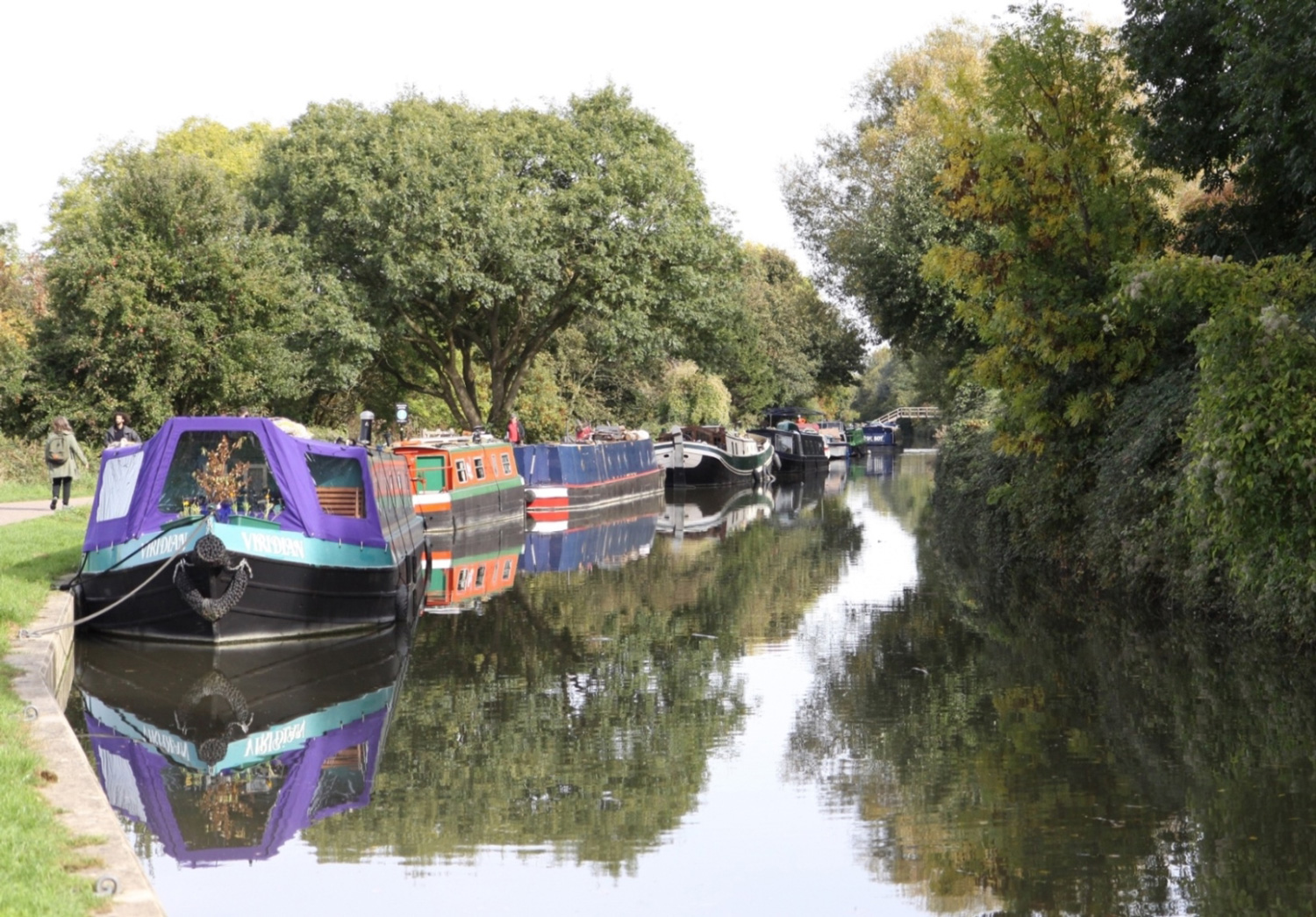
Part 3 - Meadows Lane (Black Dog) to Kennet & Avon Canal
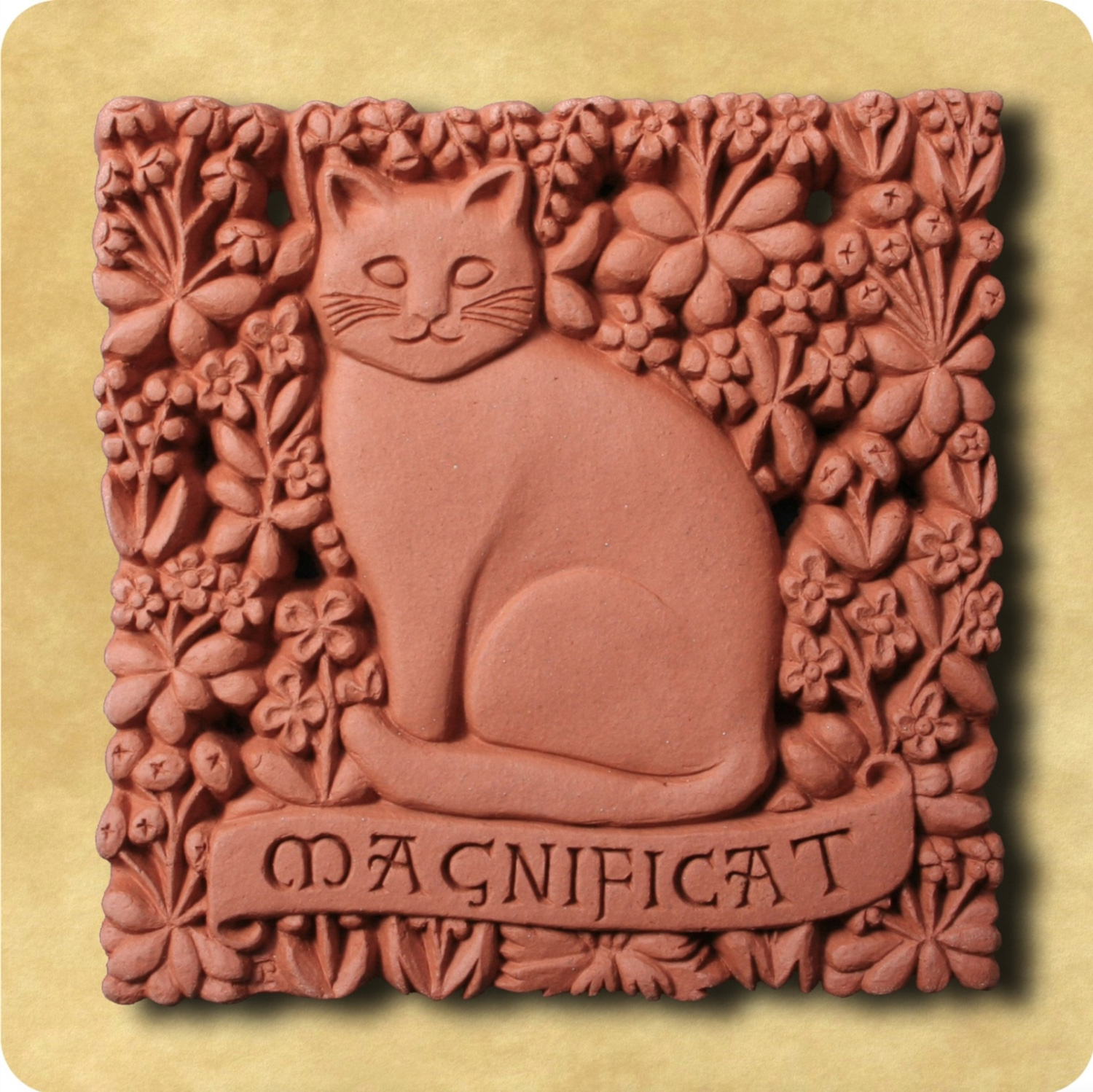
In Meadows Lane you will come to a wonderful tile making business called Black Dog. This family business has been making decorative terracotta wall tiles since the early 1980's. The range includes pets, animals, house blessings, garden designs and personalised tiles. There also decorative ceramic panels by Philippa Threlfall.
Continue onto Kensington Meadows, a lovely large green field so close into town. Amble across the field taking in the quietest part of this walk. As you cross the field look left to see the back of Kensington Place and Grosvenor Place to see a rather more haphazard appearance compared to the fronts of these buildings. Around bath the façades of Georgian terraces and crescents would be carefully designed to make sure symmetry was maintained. The façades could not be changed in any way. The terrace would be built starting at one end and the building behind the façade could be developed by each purchaser or developer. Hence windows, doors and the building blocks are not the same for each building.
Once on the field you may like to divert to the far right corner of the field (to the gate entrance to Morrison's Supermarket). You can drop down to the path alongside the river and meander along this for a different perspective. For most of the year you may see the tour boats and during the summer people punting on the river. The Bath Boating Station on the opposite bank seems to have originated as a tea garden coupled with boating facilities. However, it became increasingly popular with rowing clubs and in 1887 and 1901 two fine pavilions were added.
If doing the walk in late autumn and winter you may get a glimpse of the country's only surviving Georgian lido on the other side of the river. The Pleasure Baths, as they were known, started life in 1817 but closed in 1984. Towards the end of 2018 it was announced that Heritage Lottery Funding will contribute towards restoring and eventually reopening it to the public. In September 2023 it did reopen to the public but was closed four months later in January 2024 due to flood damage. As of early 2026 it is unclear what its future is.
When standing at the far end of the field you have to imagine that there would have been a pleasure garden here. This was mentioned earlier when standing outside the central house of Grosvenor Place. The garden was developed at the same time as Grosvenor Place but only lasted into the early 1800's due to bankruptcy of John Eveleigh and a succession of owners who attempted to keep the garden going. There is nothing left of this garden except old maps to show what it looked like.
The original Grosvenor Bridge was a delightful suspension bridge opened in 1830 but was replaced by a rather less delightful concrete bridge in 1929.
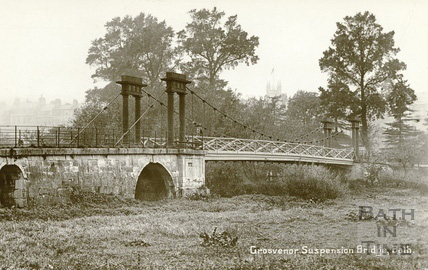
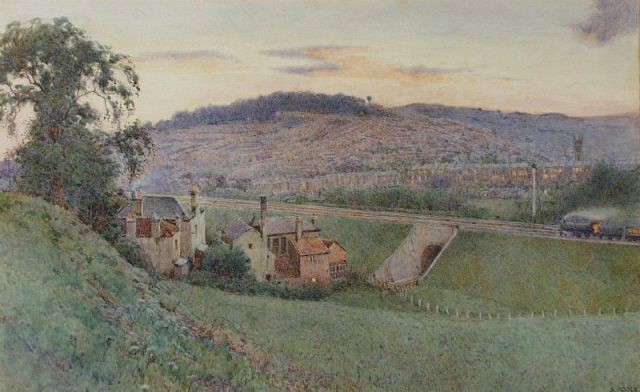
After continuing along under a railway bridge, look for the remains of some steps leading into the undergrowth. A pub known as The Folly first appeared on Thorp's 1742 map of Bath and was linked by ferry to the new pleasure garden behind Grosvenor Place. The canal cut across land behind The Folly in 1800 and this brought visitors to the area. In 1830 Thomas Shew, who lived at the eastern end of Grosvenor and owned the land at the back, constructed a suspension bridge over the River Avon to create a pleasant walk from Walcot to Bathampton and back along the river and canal. This probably made the path by the Folly busier than ever. It started to serve teas during the summer months but a number of years later it became a public house. The Folly was regarded as a 'harbour for loose characters'. It deteriorated over time and then in 1942 a stray German bomber finished it off. Although the building was still considered useable it was decided to let it crumble away just leaving the steps you can see today.
You can either take the path ahead which has steps up to the canal or turn right to follow a gentler path up to the canal. The canal was built between 1794 and 1810 to link the River Avon with the River Kennet and is known as the Kennet & Avon Canal. The combination of rivers and canal linked Bath to London and boosted the city's economy. In its heyday this canal would have been a hive of activity but the arrival of the railway only a few decades later saw many of Britain's canals abandoned and fall into disrepair. The plight of the Kennet & Avon canal was no different, and by the 1870's, parts of the canal were silting up and sections of the towpath were closed. However, in the 1960's moves were made to start restoring the canal and now it is a heritage destination with narrowboats using the canal and walkers and cyclists using the towpath.