

Part 4 - Kennet & Avon Canal to Guildhall
Where the hedge on the right of the path gives way to a chest height wall is the start of Darlington Wharf. This was a clever piece of engineering which realigned the canal so that the railway could be constructed with no sharp bends. Isambard Kingdom Brunel's railway was completed in 1841. If you look over the wall you can see the end of Hampton Row which has several derelict houses. These were compulsorily purchased as there was a plan to build a new road here but it never came to fruition. Hampton Row Halt station stood here briefly from 1907 to 1917 and all that still remains is the iron footbridge that linked the two platforms.
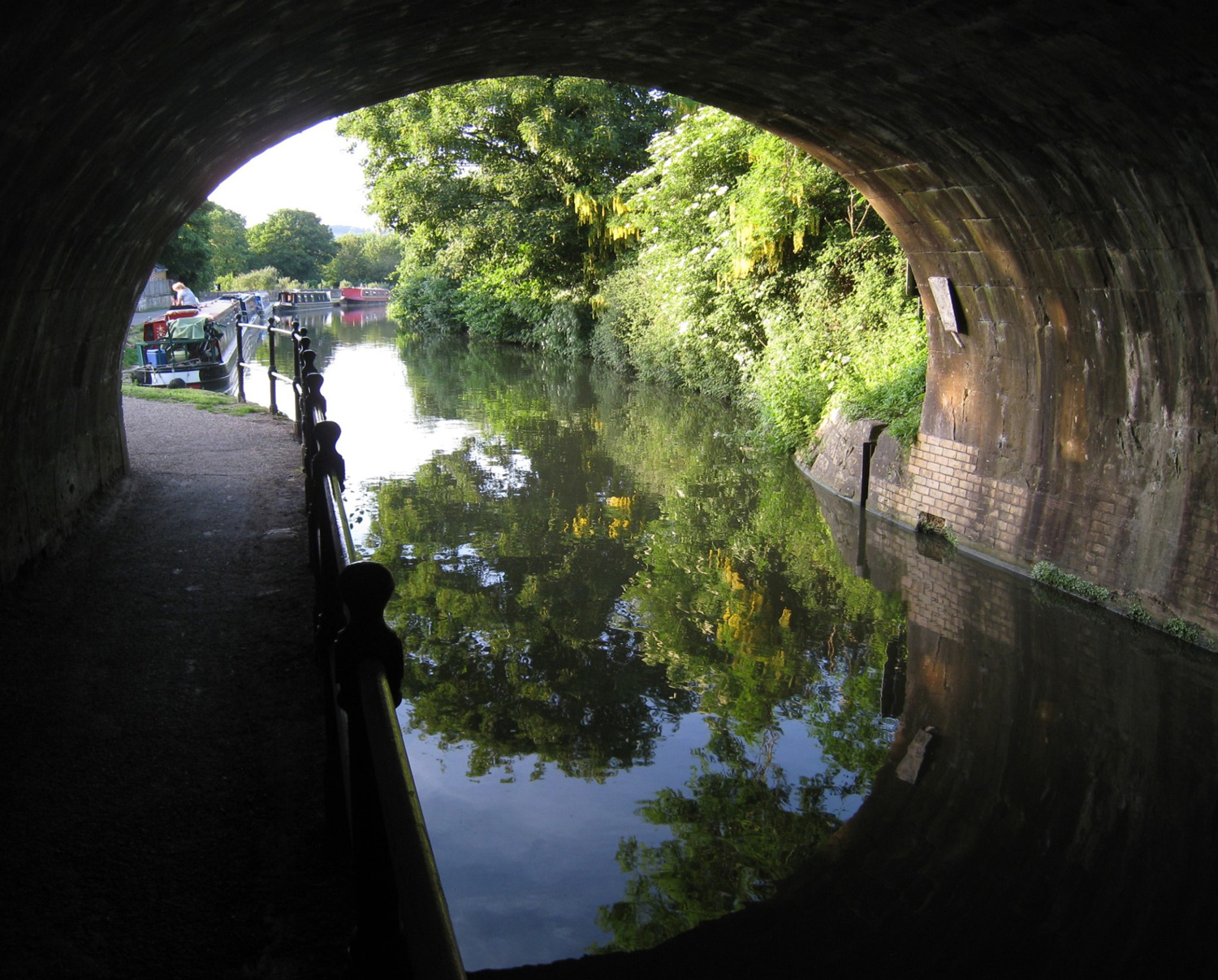
Continuing along the canal you will go through a canal tunnel. You will then pass under one white bridge and see another in front of you. These elegant wrought iron bridges were built in response to the demands of the proprietors of Sydney Gardens.
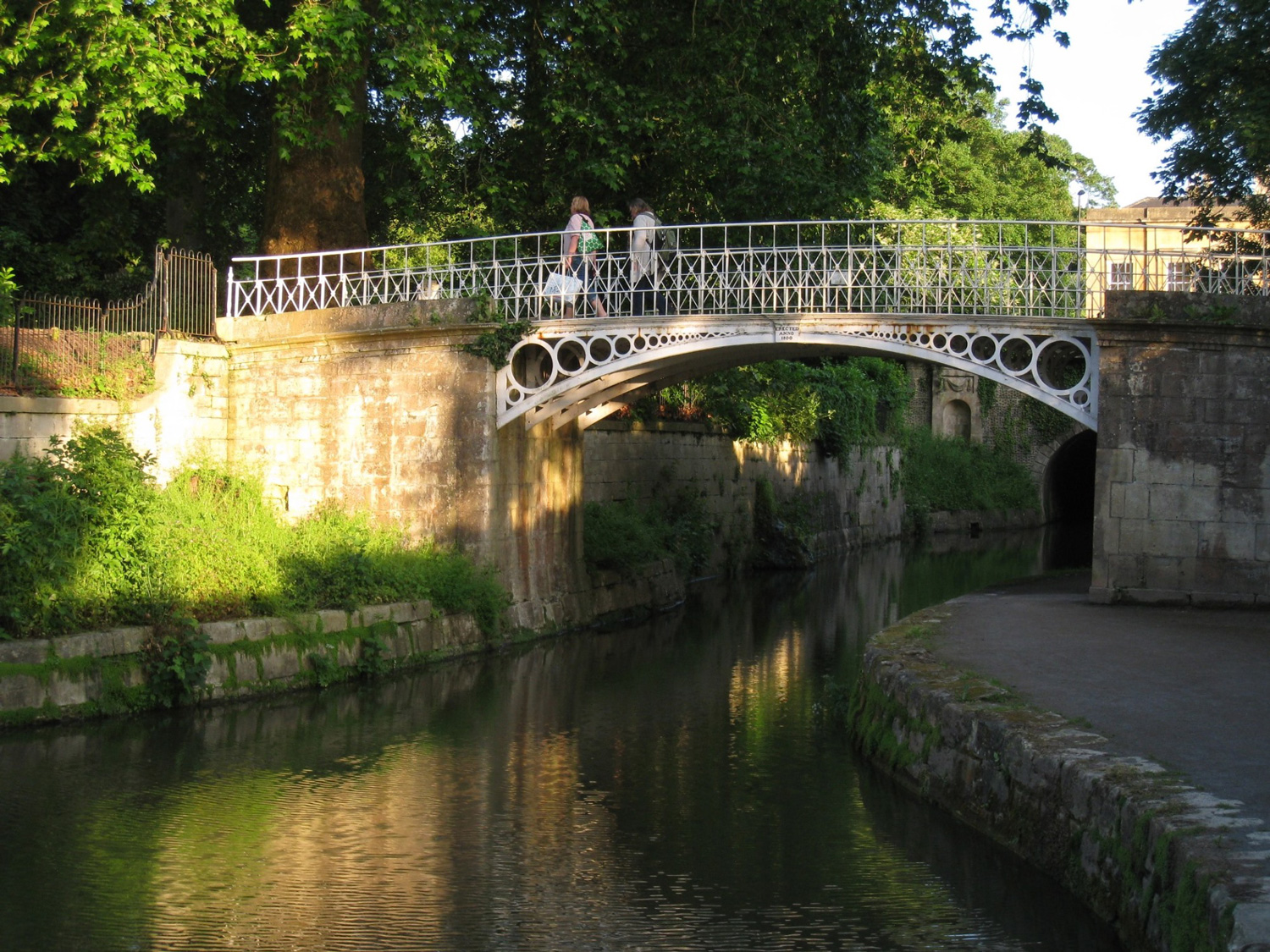
Look for a white gate between the white metal bridges over the canal. This leads you into Sydney Gardens, now one of England's few remaining Georgian pleasure gardens and the only one in Bath.
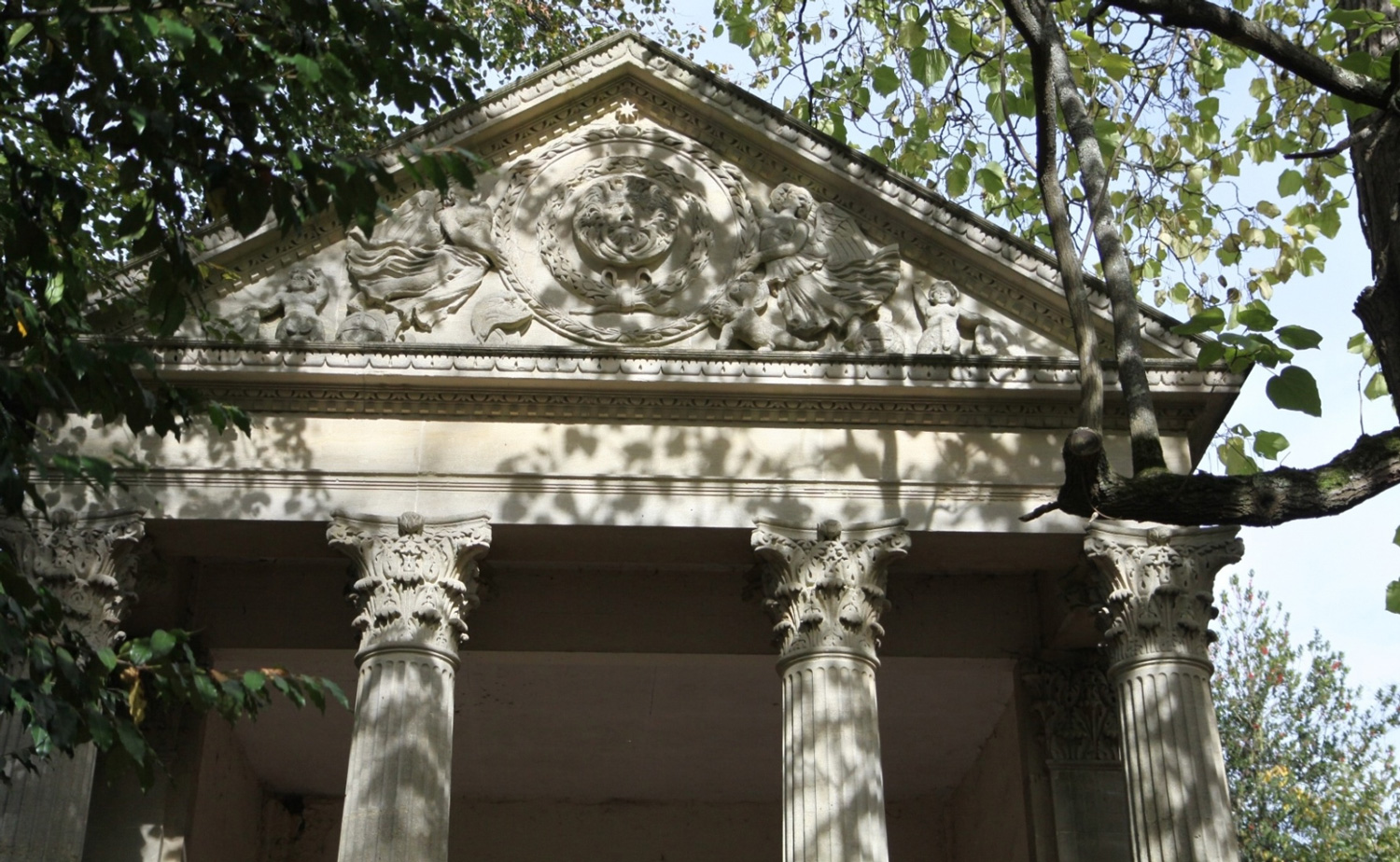
A succession of royal visits had elevated Bath to the height of fashion and after time spent in the health giving spa waters, men and women of high society would spend time 'taking the air'. Sydney Gardens proved a popular destination for promenades and concerts and was favoured by Jane Austen. You may spot a Roman style temple which has a Gorgon's head in the tympanum (the same as the original found in the Roman Baths). This was originally built in 1911 for the Festival of Empire Exhibition at Crystal Palace but was moved and reconstructed in the gardens a couple of years later to commemorate the Bath Pageant of 1909.
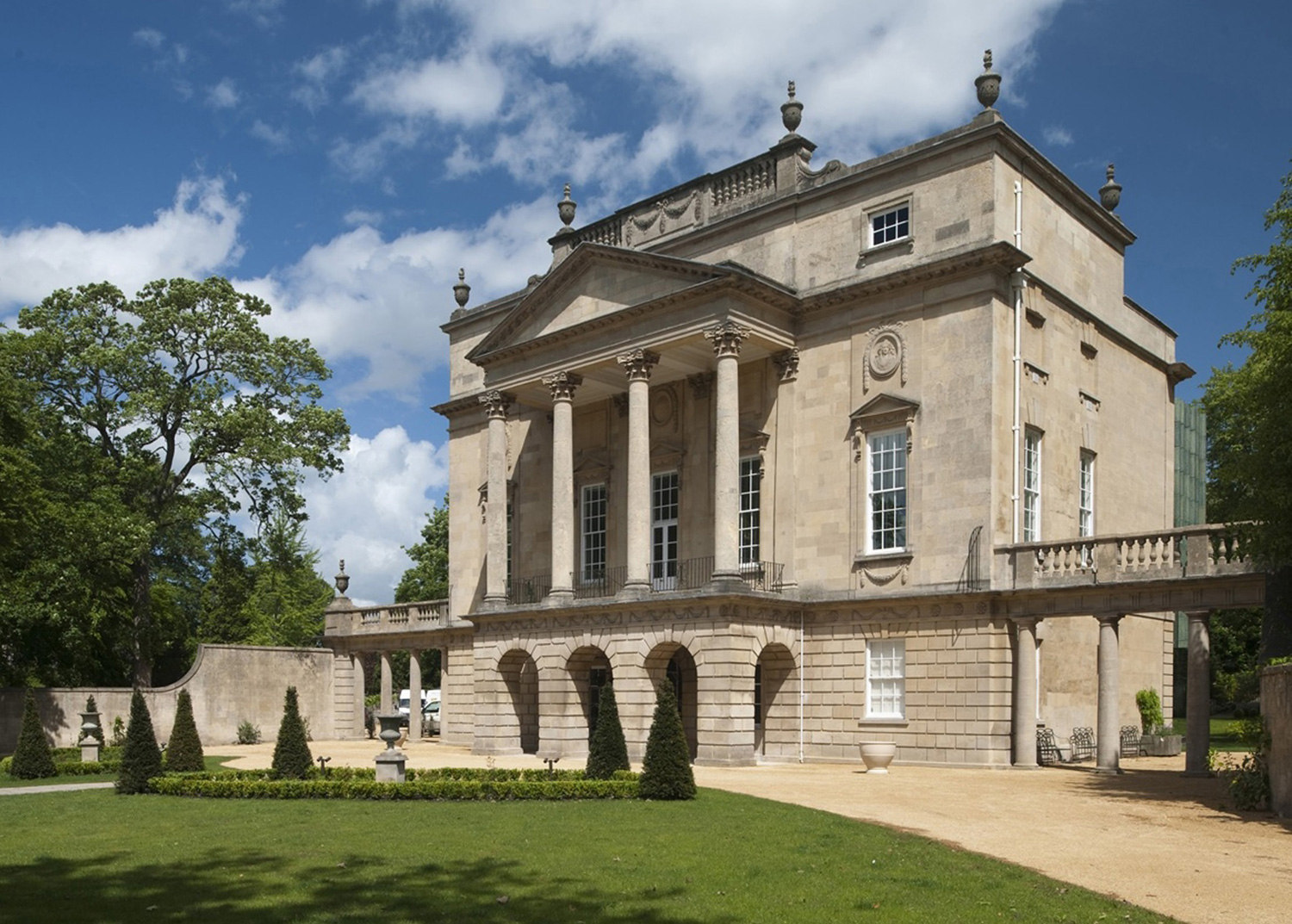
Follow the main path to the large building known as the Holburne Museum. This started life as Sydney House which was designed to be the entrance to the pleasure gardens. The museum houses a collection of Georgian art along with seasonal exhibitions. The controversial glass and ceramic extension was added in 2011.
Sydney House was part of a much larger scheme to build 'Bath New Town'. This area of town had no grand buildings, just a mill and water meadows until William Pulteney acquired the estate in 1726 for £12,000. The first step to link the town centre to this land south of the river was to build a bridge which will be mentioned a little later on. Plans were drawn up by Thomas Baldwin in 1788 for the development of Laura Place, Argyll Street, Great Pulteney Street, Henrietta Street, Sydney Place and Sydney House. A few years later came a slump triggered by the outbreak of war with France. The land around these streets was earmarked for development which never materialised due to the crash of 1793 and the land remains largely undeveloped to this day.
When standing at the entrance to the Holburne Museum look down Great Pulteney Street. Beyond the end the street you can see Twerton Round Hill which, according to legend, was the burial place of Bladud, the founder of Bath. The alignment of the street to the hill is no accident and in 1799 a correspondent wrote to the Bath Chronicle expressing 'admiration at the pleasing and happy effect of the hill that terminates the view directly in line with Great Pulteney Street in approaching Bath'.
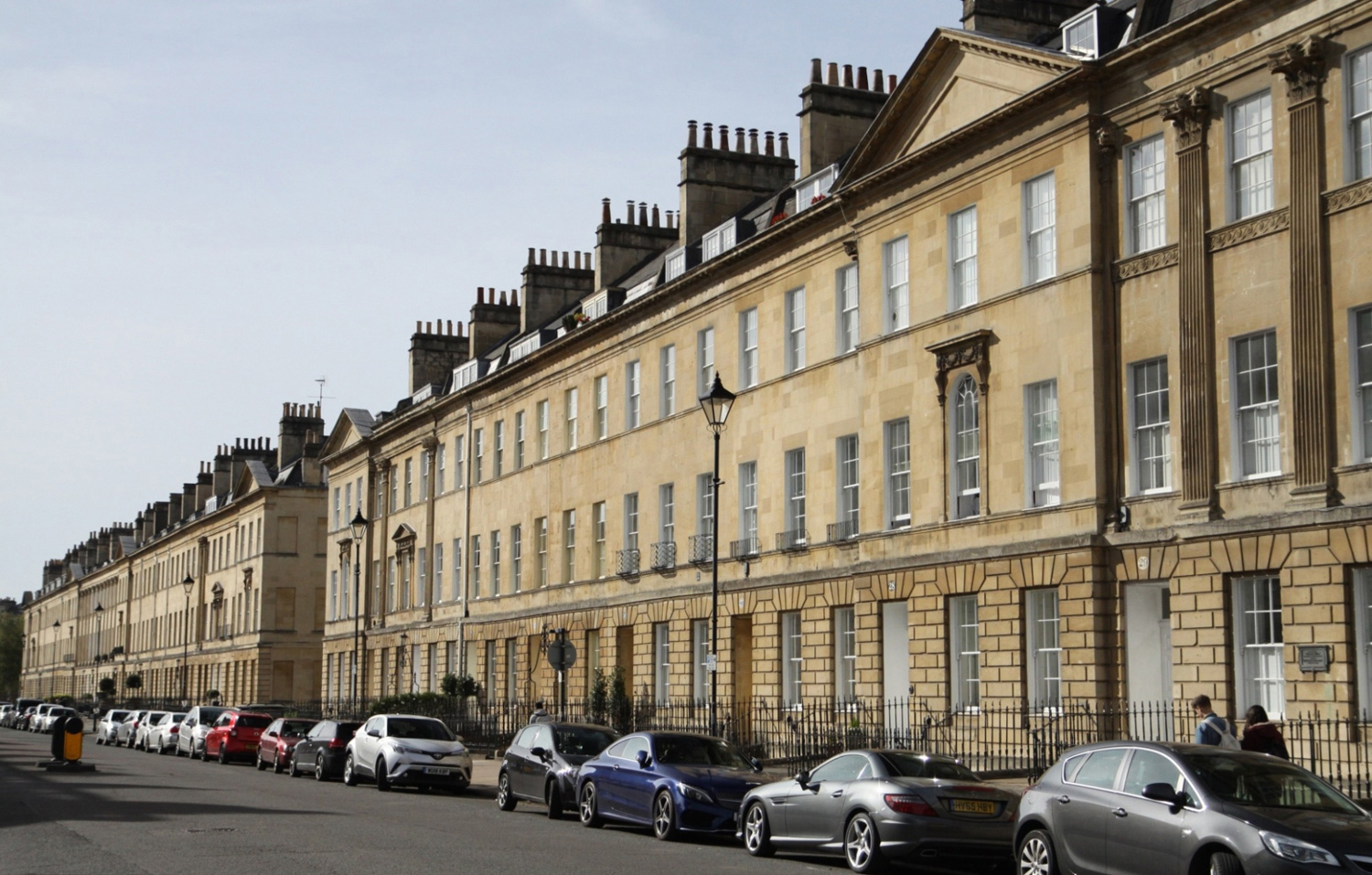
Carry on along Great Pulteney Street past the fountain on Laura Place and into Argyll Street.
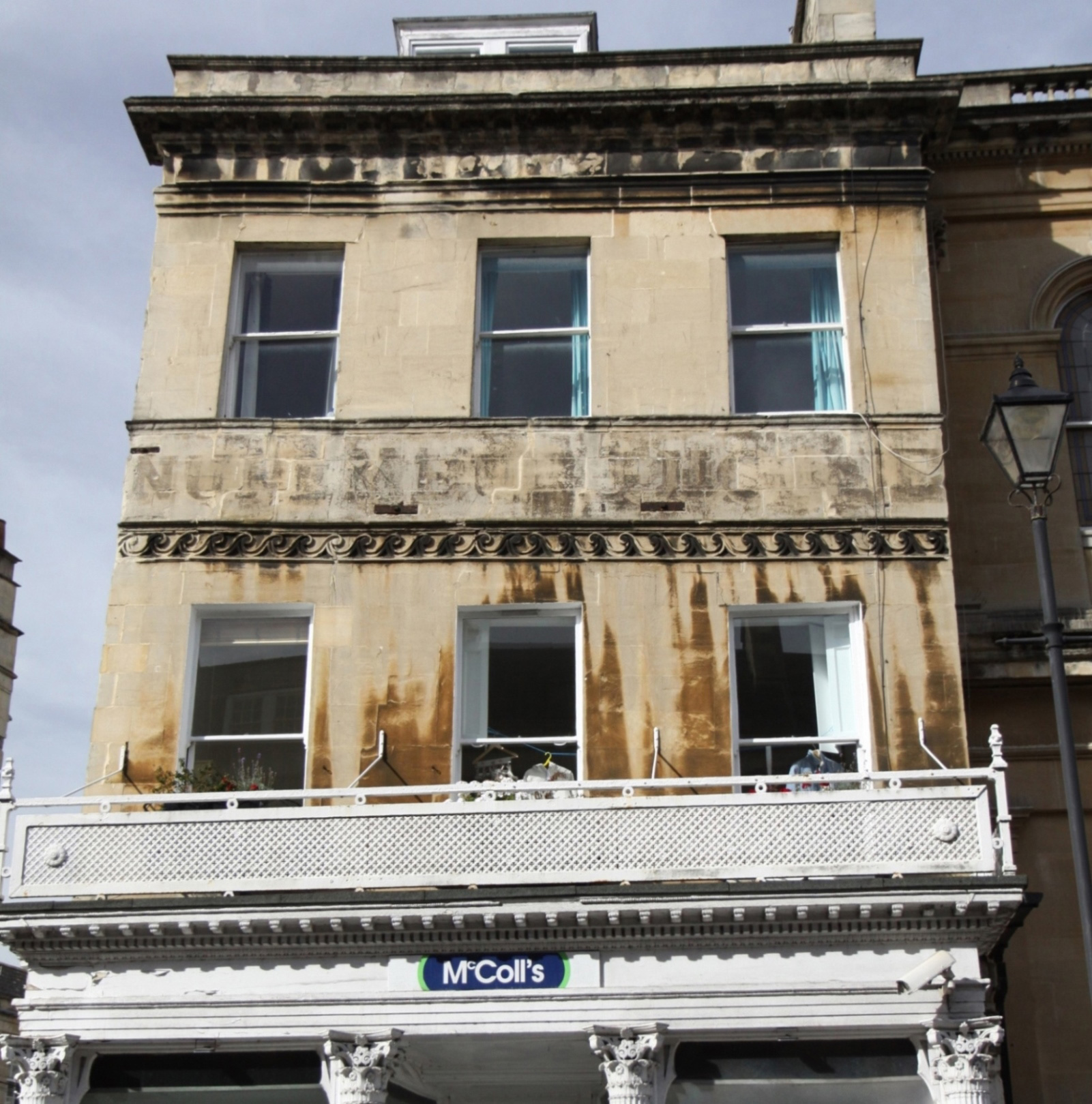
If you look at the rather wonky looking building on the corner of Grove Street and Argyll Street you may spot a ghost sign with the words Nuremburg House along with some other faint letters.In the early 1860's this building was known as the German House and it sold many fashionable German goods but this only lasted a few years. It is confusing and it is not known why the sign says Nuremburg House when it was known as the German House. Your eyes are not deceiving you, the building appears to have slumped on the right side.
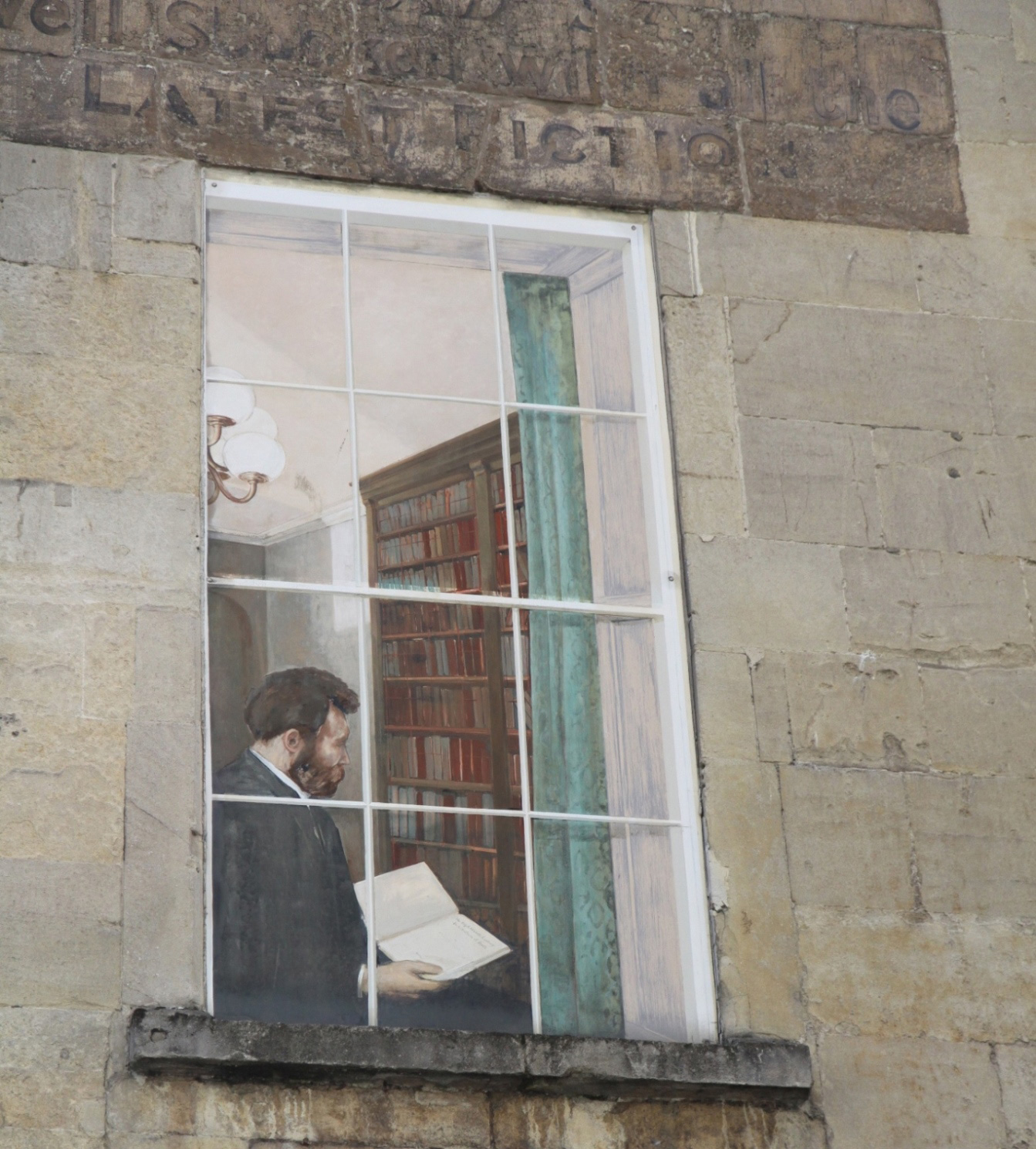
On the corner of Grove Street look up to see a trompe l'oeil window showing a man reading in a window. This most photographed of false windows is thought to have been painted sometime in the 1970's or 1980's. A bookshop was once located here and perhaps the window pays homage to the ghost sign above it.
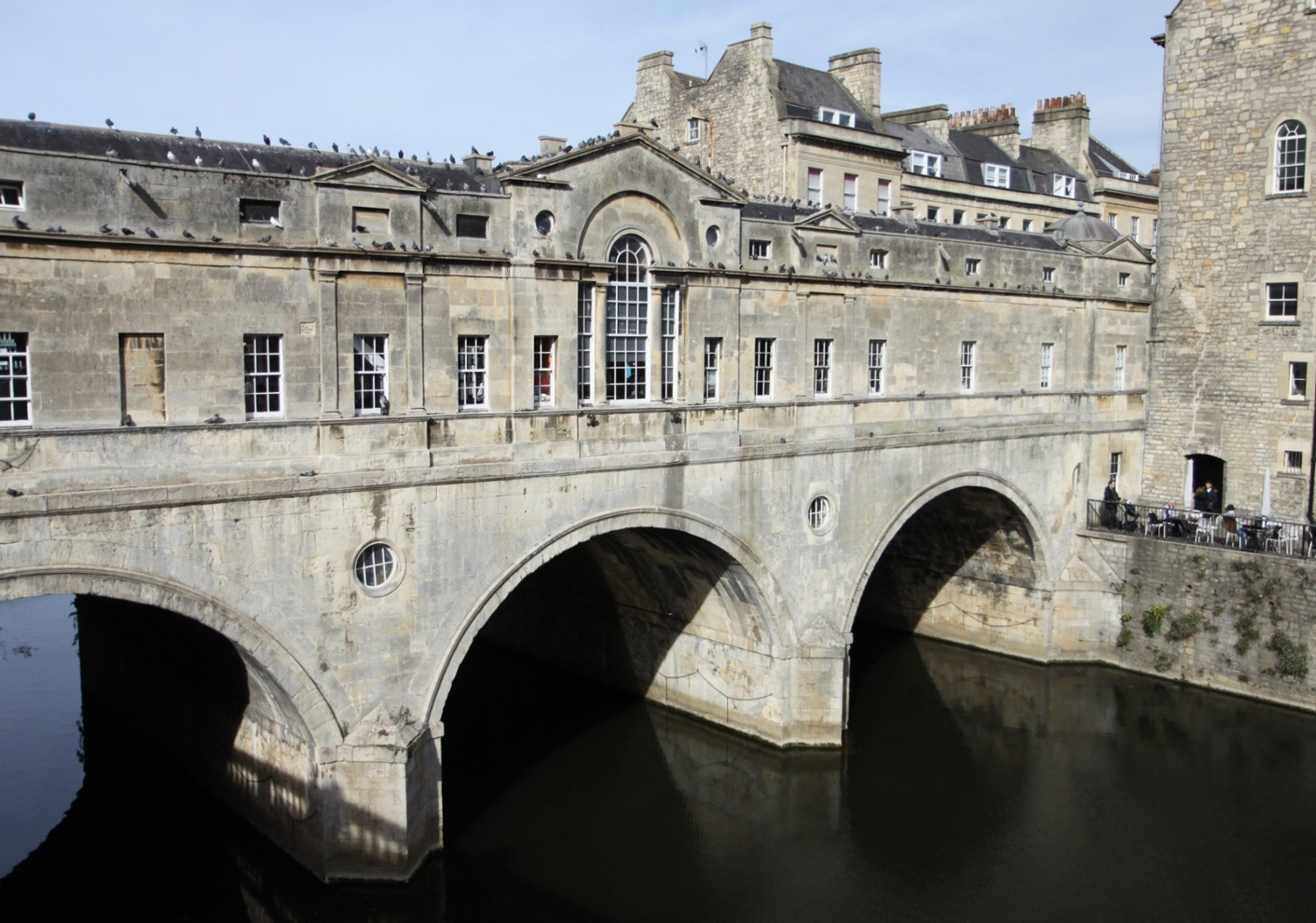
You then cross over Pulteney Bridge, one of a handful of bridges in the world built with shops on either side. The bridge, designed by Robert Adam, was inspired by Palladio's unrealised design for the Rialto in Venice. Return to the Guildhall to finish the walk.
